
Workshop 1: Ageing in Oxford: Understanding Everyday Reality
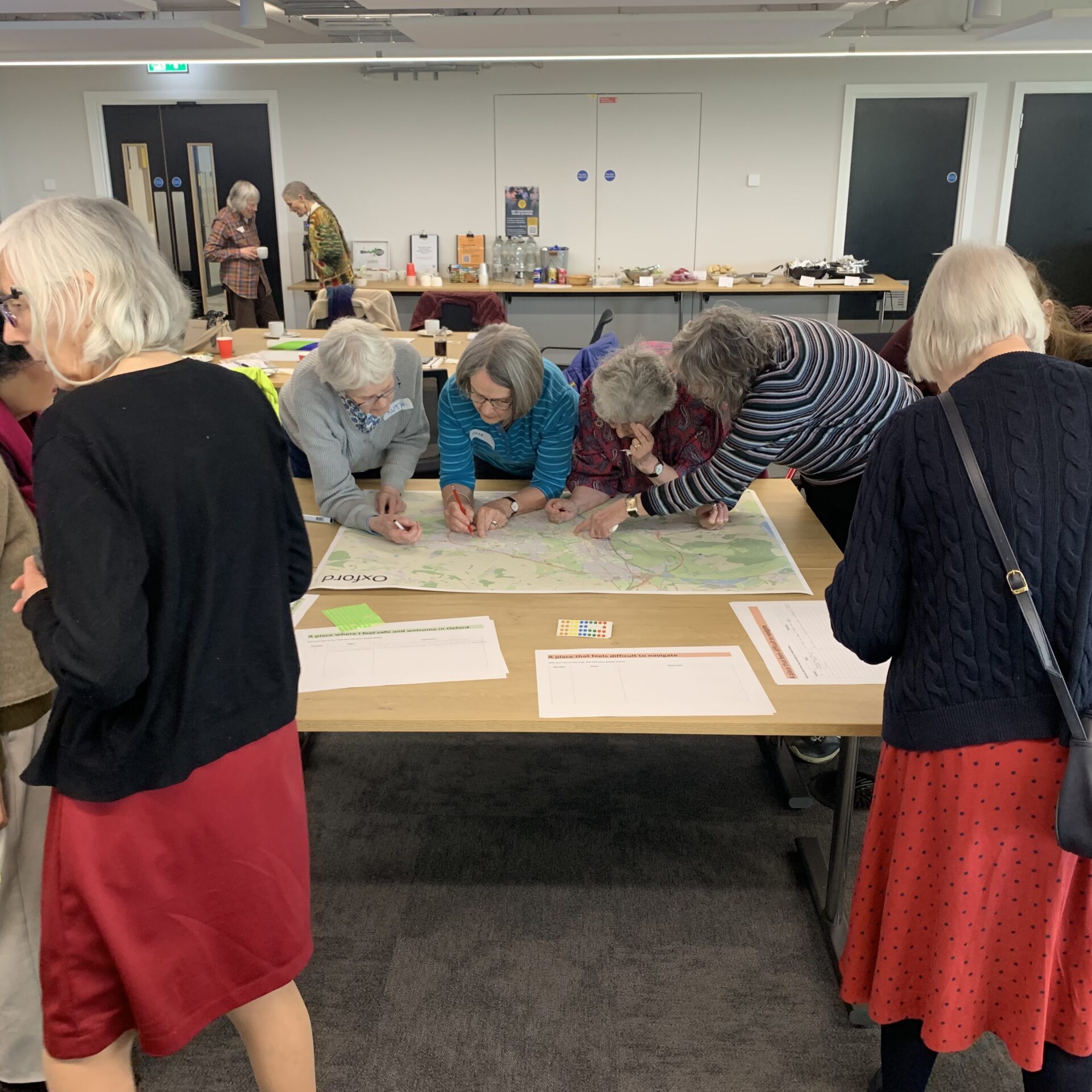
The first workshop was held on 14th April at Oxford Brookes University. The session brought together community organisations, older people and local stakeholders to explore the lived experience of ageing in Oxford today.
The workshop focused on understanding everyday life, using participatory mapping and group discussions to explore different aspects of the city. Participants rotated around themed tables aligned with the WHO framework.
These included:
- Home and housing
- Getting around and outdoor spaces
- Access to health and services
- Community participation and social inclusion
Participants were invited to reflect on what works well, as well as what makes life more difficult.
Key themes from the workshop included the importance of strong community networks, access to green spaces and high-quality health services, alongside barriers such as digital exclusion, limited awareness of available support, housing pressures, and gaps in public transport.
A clear message was that while many positive initiatives exist, they are not always well connected or easy to access - particularly for those who are more isolated, less mobile, or less digitally connected.
Workshop 2: Imagining an Age Friendlier Oxford: Co-designing the Future
A second workshop was held on 16th June to build on these insights, using a creative design thinking approach to imagine what a more age-friendly Oxford could look like and to identify shared priorities for action.
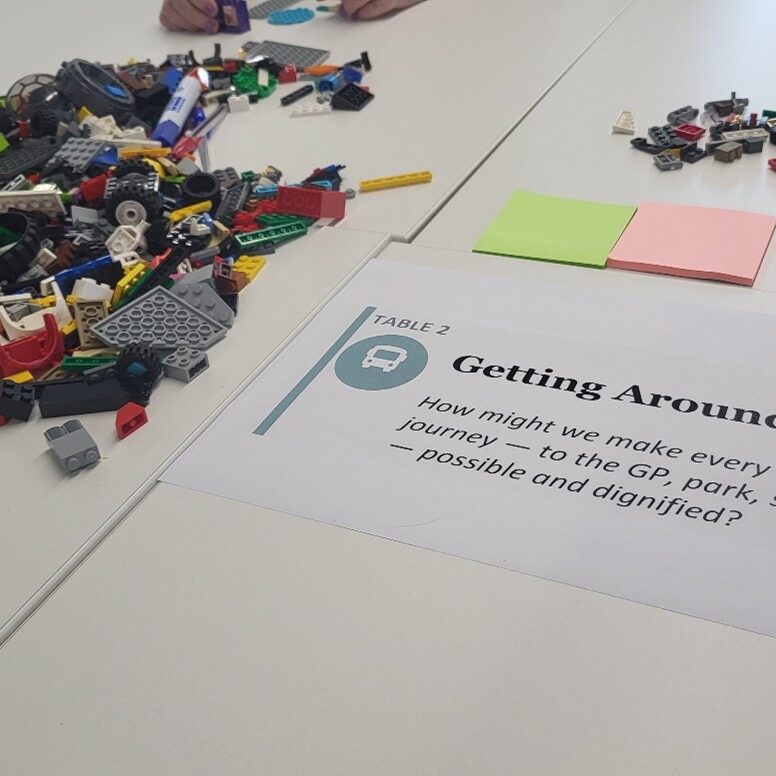
We brought together residents, community members, local stakeholders and researchers for our second workshop, “Imagining an Age Friendlier Oxford: Co-designing the Future”, held at Oxford Brookes University.
Using creative LEGO® Serious Play® activities, we explored what an age-friendly Oxford might look like and discussed ideas for making the city a more inclusive, connected and supportive place to grow older.
We'll be sharing some of the insights, ideas and priorities from the workshop as the project progresses.
What Happens Next?
The project team is conducting a rapid evidence review to map existing research, policy and local initiatives related to ageing in Oxford, guided by the World Health Organization’s (WHO) Age-Friendly Cities framework. This work aims to identify what evidence already exists, where there are gaps in knowledge, and what further research or action may be needed to support an Age-Friendly Oxford.
The project includes a programme of outreach and relationship-building with local community organisations across the city. Through informal conversations and engagement activities held within community spaces, the project seeks to better understand the everyday experiences of older residents, particularly those whose voices are often underrepresented in research and policy discussions.
Together, these activities will contribute to a range of project outputs, including stakeholder mapping, workshop findings, the evidence review, and a series of co-produced priorities and recommendations. Findings and resources will be shared on this webpage throughout the project, with the outputs brought together in a final report at th . The results of this project will help inform future policy and practice, strengthen collaboration across sectors, and support Oxford’s longer-term ambition to join the UK and global Age-Friendly Cities and Communities network.
Project team
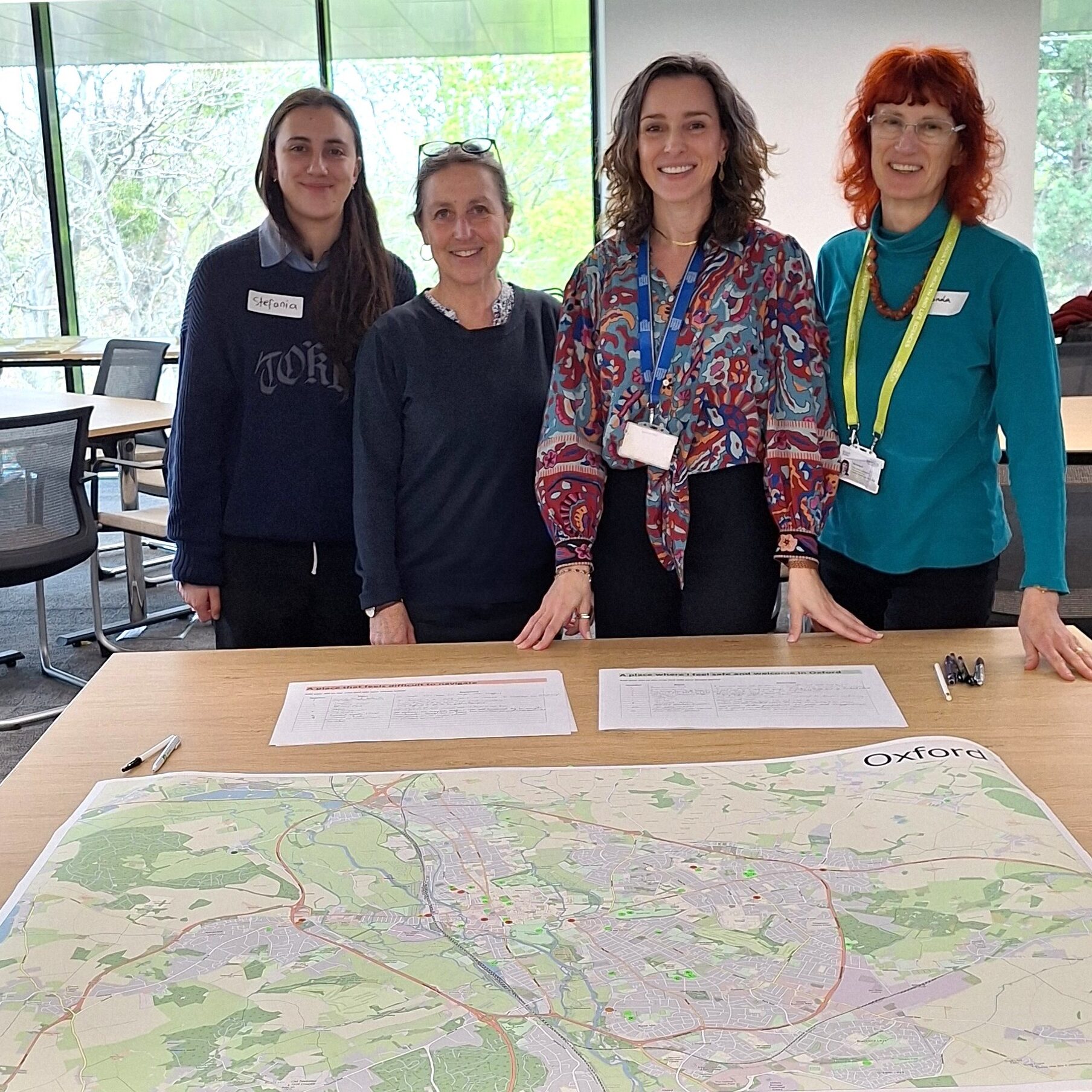
- Rhonda Riachi, Senior Lecturer, Lead for Service User and Caregiver Involvement; Co-Lead, HACN, Faculty of Health Sciences and Technology, Oxford Brookes University.
- Dr Karla-Zimpel-Leal, Associate Professor in Innovation and Enterprise at Oxford Brookes Business School, HACN
- Dr Hannah Grove, Researcher at Global Centre on Healthcare and Urbanisation, Kellogg College
Funding
This research is funded by the Vivensa Foundation – Academy Ignition Fund (2025-AIF33)