
Dr Mirjam Schindler
Senior Lecturer in Human Geography, Te Herenga Waka – Victoria University of Wellington, New Zealand, GCHU Visiting Global Research Associate
As cities grapple with inequality, rapid urbanisation, and growing health pressures, the idea of the “healthy city” has become both more urgent and more contested. Much of this conversation, however, still begins with design. We focus on, for instance, walkable neighbourhoods, access to green space, active mobility and social infrastructure. We map, measure, and plan for the conditions assumed to support health, with initiatives such as the UK’s Healthy New Towns programme seeking to embed these principles in practice.
And yet, a persistent tension remains. Across cities, and even within the same neighbourhood, similar design features lead to very different lived outcomes. Spaces intended to support health can feel disconnected, underused, or unevenly experienced. Others, less obviously designed for health can become central to everyday practices that support health.
This tension sits at the centre of my research and has shaped my reflections during my time as a Visiting Research Associate at the Global Centre on Healthcare and Urbanisation (GCHU) in Oxford.
From healthy environments to lived health
My work starts from a simple premise: urban health is not a fixed property of environments, but something that continually emerges through how those environments are lived, negotiated, and connected across socio-spatial practices and wider urban systems.
As a geographer, I am interested in the relationships between people and place: how we move, interact, care, and engage with our surroundings in everyday life. These relationships are not uniform. They are shaped by circumstance, identity, opportunity, and constraint. The same place can be enabling for some and limiting for others.
This perspective shifts the focus from asking what makes a place healthy to asking: How is urban health enacted, negotiated, and shaped within urban systems?
A research trajectory: nature, liveability, and mobility
Across my work, I have explored this question through different lenses.
In research on urban nature, I have examined how green space is distributed and measured, but also how it is encountered and made meaningful in everyday life. Access to green space is important, but it is only one part of the picture. What matters is also the quality of these spaces, whether they offer the kinds of experiences people seek, and how they align with different understandings of what counts as “nature”. Just as importantly, access or quality alone does not necessarily translate into health benefits if people do not feel connected to nature, do not value it, or do not see it as relevant to their everyday lives. In some cases, this means that available green space remains unused or unnoticed. What comes into view, then, are the subtle and uneven ways in which nature is encountered: the street tree passed on a daily walk, the sound of birds, or the sensory experiences of children. These often-overlooked interactions can be central to health yet are easily missed in conventional measures of provision.
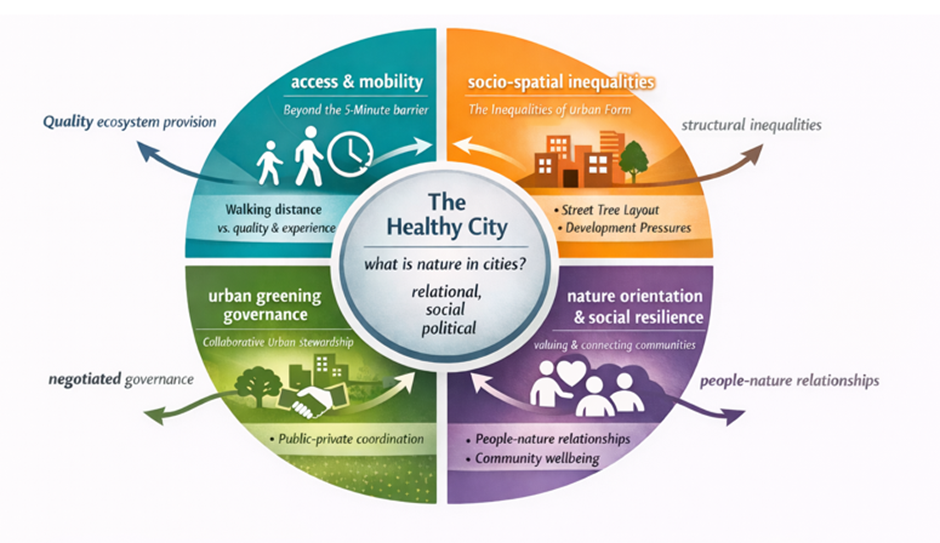
Figure 1: Urban nature: beyond provision. A schematic illustration of some of my work on urban nature relevant to the healthy cities debate.
In work on urban liveability, we have explored how people experience urban environments as negotiated spaces. Liveability is not simply about achieving optimal conditions; it is about making everyday life work. People navigate trade-offs, such as between housing affordability and location, safety and interdependence, density and green space. What emerges is not a single vision of a “liveable” place characterised by a set of measurable criteria, but a series of negotiated trade-offs that work differently for different people.
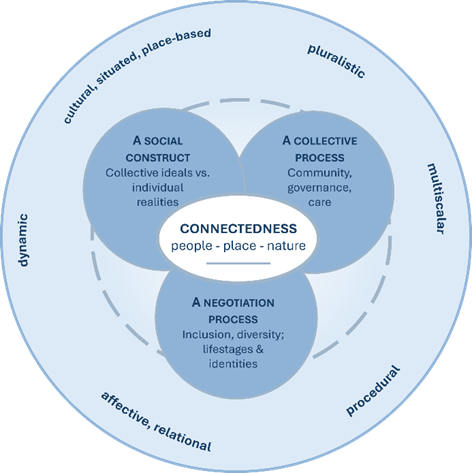
Figure 2: Liveability not as urban excellence but as a negotiated process (Schindler and Dionisio, 2026).
And in research on parent-centred urbanism, we have focused on early parenthood as a moment when relationships to the city shift. Walking, for example, becomes slower, more local, and more attuned to immediate surroundings. The research reveals how urban environments are engaged with in ways that challenge dominant assumptions about mobility, efficiency and use of space.
Figure 3: In our parent-centred urbanism research we explore lived experiences of parents with young children navigating urban mobility.
Across these areas, a consistent insight emerges: Urban health does not follow directly from urban design or provision, but from how environments are inhabited, negotiated, and connected within wider urban systems.
Barton Park: A Healthy New Town in practice
This perspective is shaping my current research in Barton Park, a Healthy New Town on the edge of Oxford. Designed to promote active living, green space, and social connection, Barton Park is located on the edge of an established neighbourhood with different spatial forms, populations, and identities.
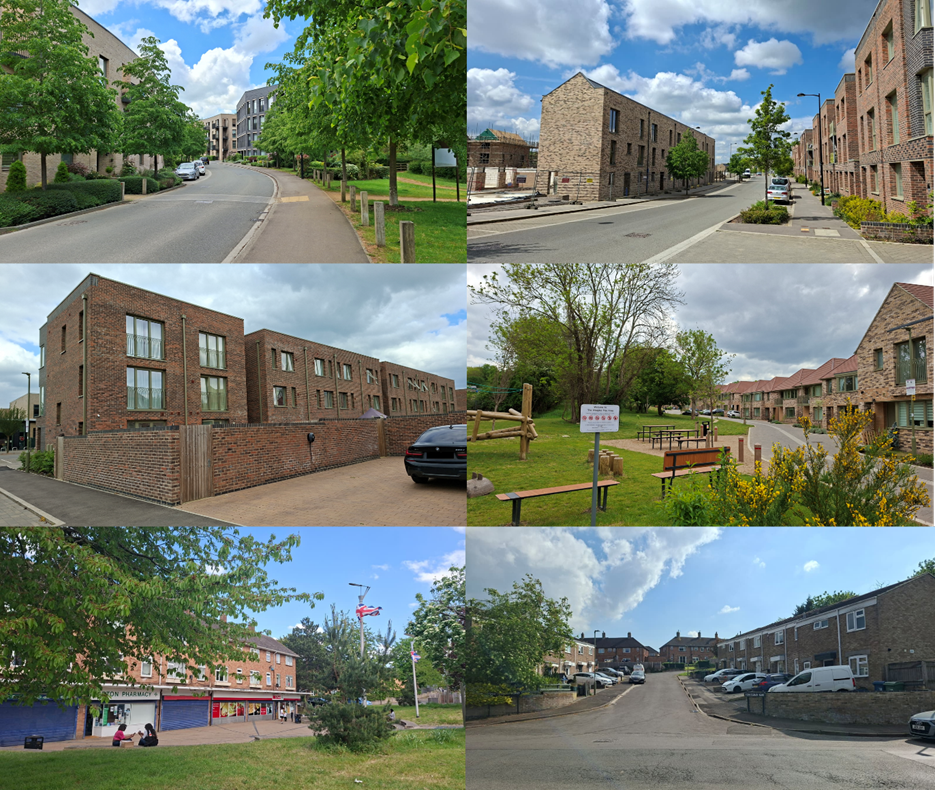
Figure 4: Impressions from Barton Park and Barton (author credit).
Walking interviews with residents from both newly established Barton Park, and the original Barton neighbourhood reveal how these health objectives are negotiated in everyday life.
Community, for instance, is not a shared condition but a set of parallel practices. Some residents are actively engaged with the community centre and its support networks, while others remain largely disconnected, or rely instead on immediate neighbours or digital groups confined to distinct streets or areas. These differing forms of engagement reflect how socio-spatial practices vary across groups, and how practicing “community” is shaped by existing relationships and capacities rather than simply by provision.
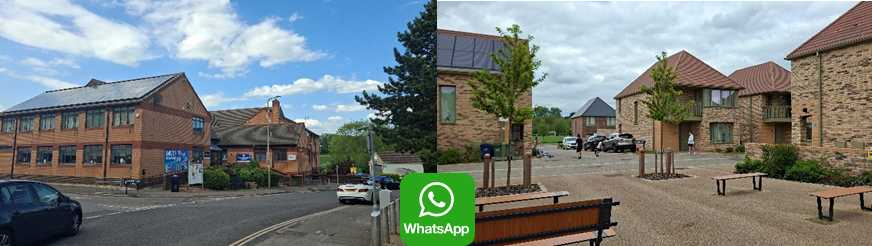
Figure 5: Parallel community practices in Barton and Barton Park (author credit).
Infrastructure is also unevenly activated. A community garden established in the new development, once envisioned as a space for collective activity, now sits largely unused, with unclear responsibility for its upkeep. In contrast, a long-standing garden in the older neighbourhood continues to function as a social anchor. This points to the role of structuring conditions, such as governance and stewardship, in sustaining health-supporting practices over time.
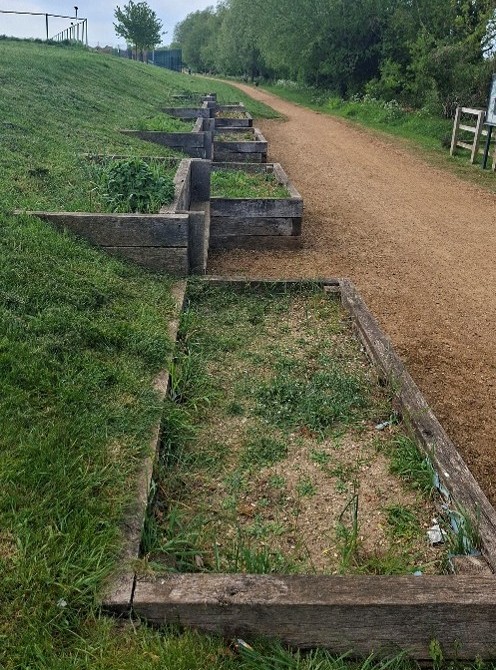
Figure 6: Unevenly socially activated infrastructure in Barton (Park), such as this community garden (author credit).
For some residents, life in Barton is shaped as much by wider urban systems as by the neighbourhood itself. Multiple participants described moving to the area primarily because it was more affordable, while their children attend schools elsewhere in the city to orient them towards prospective futures beyond the neighbourhood. They spoke of navigating different social worlds and of not always feeling that they belonged in either. Their experience illustrates how health is shaped not only through local practices and relationships, but also through broader interdependencies extending beyond the neighbourhood itself.
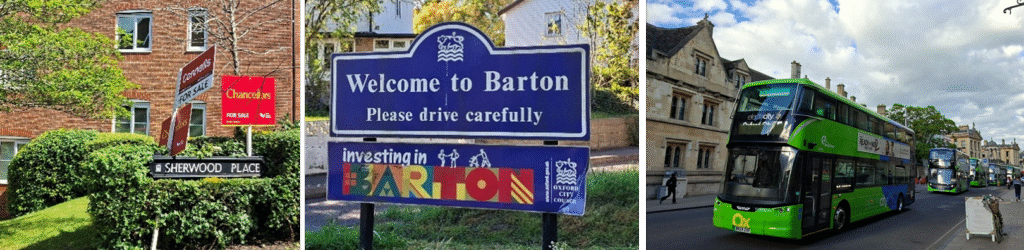
Figure 7: Negotiating belonging beyond the Barton neighbourhood (author credit).
What emerges is not a simple gap between design and outcome, but the ongoing process through which urban health emerges – through practices shaped by structural conditions and embedded within wider urban systems.
What this reveals about healthy cities
These insights, from Barton and across my research, have led me to develop a conceptual framework that rethinks how we understand healthy cities.
Rather than treating health as an outcome of environmental features or planning interventions, this work understands urban health as a system property that emerges through three interacting dynamics, centring on relationships:
- First, urban health is enacted through socio-spatial practices, such as across mobility, housing, care, social interaction, engagement with place, and across multiple spatial scales.
- These practices are shaped and constrained by structuring conditions, including inequality, governance arrangements, social norms, and access to resources. Such conditions shape what is possible, for whom, and under what circumstances, often in ways that are uneven and contested.
- At the same time, these dynamics are embedded within wider urban systems. Neighbourhoods do not function in isolation, but are connected to broader processes such as housing markets, mobility networks, and service provision, which shape how places are used and experienced.
From this perspective, urban health is not a fixed outcome or a property of place. It continuously co-emerges through the interaction of practices, structures, and systems, and is therefore always in the process of being negotiated and re-made.
So what does this mean for planning and practice?
This does not mean that design is irrelevant. Urban environments shape what is possible. They enable and constrain how people live. But it does mean that design alone is never enough. If we want to create healthier cities, we need to move beyond asking whether certain features are present or absent and instead pay closer attention to how they are used, experienced, and integrated into socio-spatial practices and how they shape relations within and beyond the urban system. This requires engaging with lived experience, recognising difference, and acknowledging that health is shaped through relationships – between people and places, between infrastructures and practices, and across different aspects of the urban system.
Healthy cities as something we continually make
These are emerging ideas that I’ll develop further in the coming months. One of the most valuable aspects of my time at GCHU has been the opportunity to explore these questions in dialogue with colleagues across disciplines, and with residents of a Healthy New Town. These conversations reinforce a shared reflection: that urban health is not something we can fully design or deliver. It is something we participate in. In this sense, urban health is not something that can be fully designed, but something that is continually enacted, negotiated, and shaped within urban systems.
Hybrid seminar presented by Mirjam on 11th May 2026- “Rethinking healthy cities –To what extent can urban health be designed? Urban health as enacted, negotiated and dynamic”.