
Stefanio Malos, GCHU intern and undergraduate student at Merton College
Stefania Malos, a first-year undergraduate student at Merton College, University of Oxford, joined the Global Centre on Healthcare & Urbanisation (GCHU) for a three-week internship to work on the Age-Friendly Oxford project. As part of this, she conducted an evidence review exploring ageing-related research carried out in Oxford over the past 20 years, and how this aligns with the World Health Organization’s Age-Friendly Cities framework.
She also took part in a workshop, “Ageing in Oxford: Understanding Everyday Reality,” held on 14th April at Oxford Brookes University.
In this blog, Stefania reflects on what she learned during her time at the GCHU.
“Difficult”, “complicated”, “community”, “diverse” and “changing”.
These were just some of the words older residents used to describe ageing in Oxford during the workshop.
At first, they might sound like simple descriptors. But they stayed with me – not only because of their honesty, but because they reflected something I had already begun to see in this research: ageing in a city like Oxford is not one single experience. It is shaped by a complex mix of environment, community, access, and opportunity.
Over three weeks, my internship focused on a central question:
What ageing-related research has been conducted in Oxford over the past 20 years, and how does it align with the WHO age-friendly cities framework?
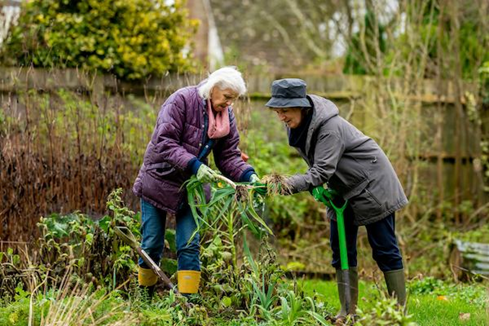
Photo source: Centre for Ageing Better
Looking for an ‘age-friendly’ Oxford
The idea of an age-friendly city, developed by the World Health Organization, goes beyond healthcare. It considers everything from transport and housing to social participation, access to information, and community support.
At first, I expected to find studies explicitly using this framework, however this was not the case. Instead, what I found was something more interesting. Most of the evidence came from local authority strategies, health system reports and third sector organisations such as Age UK Oxfordshire. While very few sources directly referenced the WHO framework, many aligned closely with its principles – often without naming them.
What the existing research showed
Across the sources I reviewed, I found several consistent themes.
There is a strong and well-developed focus on supporting older people to remain independent and healthy for longer. For example, Oxfordshire’s Age Well strategy highlights programmes such as Move Together, which helps people become more physically active through community referrals, and Stay Strong and Steady, a falls prevention programme that has reported improvements in participants’ mobility, balance and confidence. Alongside this, social prescribing initiatives have connected thousands of older residents with community-based support, activities and services
At the same time, loneliness and social isolation appeared in almost every report. Research conducted for Oxfordshire’s Older People’s Strategy identified loneliness and isolation as one of the issues older residents were most concerned about as they age. This was reflected in initiatives such as dementia cafés, befriending schemes and community groups designed to strengthen social connections and reduce isolation.
The built environment plays a significant role. Access to green spaces, safe walking routes, and suitable housing all influence how people experience ageing. Yet issues such as affordability, transport limitations and accessibility continue to create barriers.
Another theme that stood out was communication. Reports on digital inclusion highlighted that many older people still face barriers to accessing online information and services. While initiatives such as Live Well Oxfordshire provide extensive directories of local support, several suggested that people are often unaware of what is available or prefer information in non-digital formats.

Photo source: Centre for Ageing Better
What the workshop revealed
The workshop itself was designed to move beyond data and findings and focus on everyday experiences of ageing in Oxford, giving a human dimension to the information I had gathered and placing it into a more personal context.
It began informally, with participants arriving, sharing lunch, and contributing initial reflections. One simple prompt – “one word that describes ageing in Oxford”- generated responses like “difficult”, “complicated”, “community”, “diverse”, and “changing”. Alongside this, participants marked a large map of Oxford, highlighting places where they felt safe and welcome, as well as areas that were harder to navigate.
This early activity set the tone: grounding the discussion in real, lived experiences across the city.
The main session then focused on small group discussions, where participants rotated between themed tables covering key aspects of daily life:
- Home and housing
- Getting around and outdoor spaces
- Access to health, services, and information
- Community, participation, and social inclusion
What stood out most was how different it felt to hear these experiences directly. Issues I had read about- such as loneliness, access, and confidence in getting around the city -became far more tangible when expressed in people’s own words.
Alongside this, there was a clear eagerness to discuss improvements, which highlighted how strongly people felt about shaping their future and circumstances. The sense of community was evident both in the room and throughout the discussions, with inclusion and connection repeatedly emerging as central to how people experience ageing in Oxford. Interestingly, many of these conversations closely reflected the themes emerging from the evidence review. Concerns around transport, access to information, social isolation and maintaining independence were all present in both the research and the lived experiences shared during the workshop. This reinforced the value of combining formal evidence with direct engagement, as each helped provide context for the other.
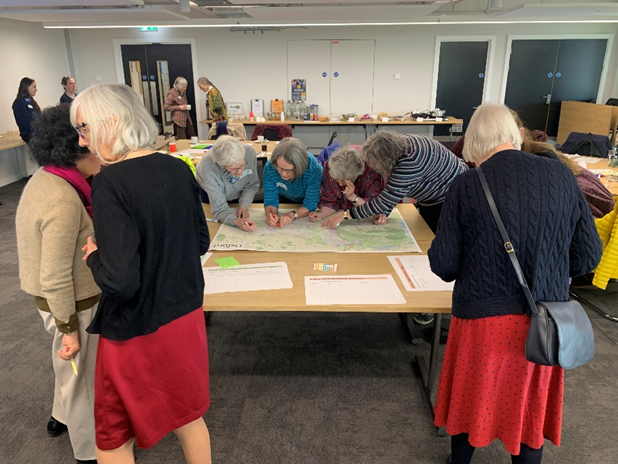
A photo from Age-Friendly Oxford Workshop
So, is Oxford age-friendly?
In many ways, yes.
Oxford has a substantial and well-developed body of work focused on ageing. There are strong partnerships across health, social care and the community sector and a wide range of initiatives already in place that support older residents.
But the work is often fragmented. Very few studies explicitly use the WHO age-friendly framework. Thus, research on the different domains, such as health, housing, transport and community, is often carried out in isolation. As a result, Oxford is doing much of what an age-friendly city should do, but without presenting it as a joined-up, cohesive approach.
Looking back on the three weeks, one of the most valuable lessons was recognising how closely the design of a city influences people’s ability to age well. Before this internship, I had not fully appreciated how factors such as transport, housing, access to information, or even the availability of benches and public spaces could affect someone’s confidence, independence and sense of belonging.