Timothy J. Dixon
Emeritus Professor at the University of Reading and Visiting Fellow/Research Associate, Kellogg College/GCHU
In this blog, GCHU Research Associate Timothy J. Dixon examines whether continued estate regeneration (such as the Kidbrooke Village project) in London offers sustainable outcomes for residents.
Andy Burnham, the new UK prime minister, recently proposed tackling the nation’s housing crisis through a huge social housing programme. This throws the spotlight back onto whether the balance of housing development (private and social) is really in alignment in England’s towns and cities, including London, and whether the existing national target of 1.5 million new homes by 2029 is realistic.
A recent HBF report highlighted that only 30,000 homes were completed in London in the year to June 2025, down 12% from the previous year and significantly below the 2019/20 peak. To put this into context, given London’s target of 88,000 homes a year, output would need to more than double, increasing by 175%, to meet this goal, painting a bleak picture of the city’s housing crisis.
Since 1997 successive UK governments have focused on encouraging ‘estate regeneration’ projects on London’s great council estates such as Ferrier, Aylesbury, Carpenters, and Woodberry Down. The goal was not only to increase housing supply in London by demolition and rebuilding mixed-tenure housing at higher densities, but also to tackle the perceived socio-economic problems on these so-called ‘sink estates’ by upgrading and redesigning the existing housing stock. These estates were often characterised by crime, poverty, overcrowding, and anti-social behaviour caused for example, by chronic underspending on physical maintenance and inherent design flaws.
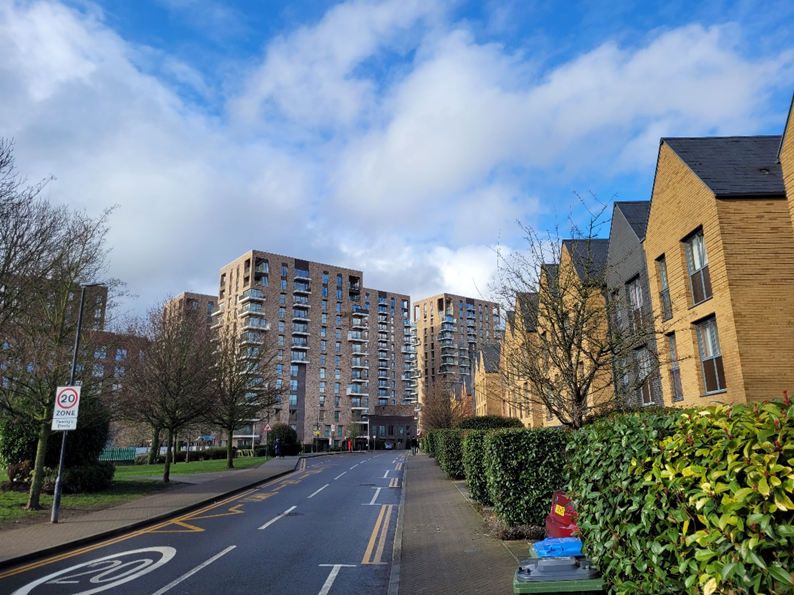
Figure 1: Kidbrooke Village in Greenwich, London (source: author)
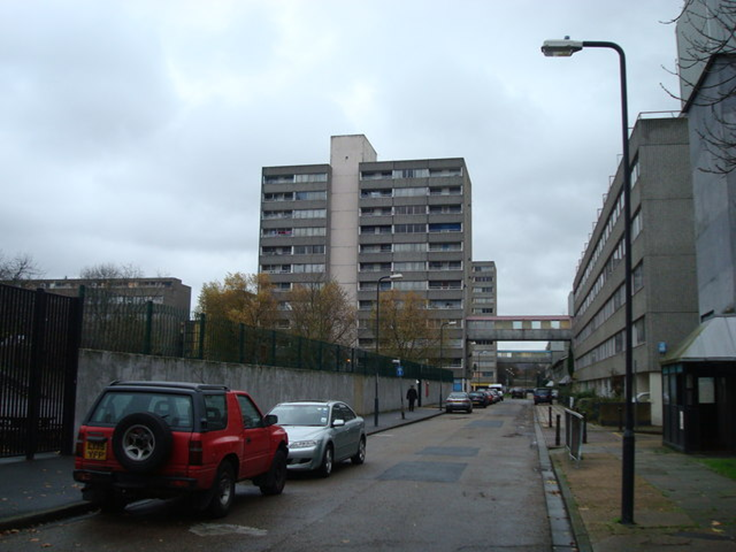
Figure 2: Ferrier Estate in Kidbrooke, Greenwich (source : https://commons.wikimedia.org/wiki/File:Ferrier_Estate,_Kidbrooke_-_geograph.org.uk_-_1588865.jpg)

Estate regeneration has been defined as the process of physical renewal of social housing estates using measures such as refurbishment and demolition. It is estimated that 160 such estates – comprising 55,000 households – have been ‘regenerated’ since 1997 and 139 estates are currently marked for demolition and redevelopment or are currently undergoing regeneration. A leading example is Kidbrooke Village (Greenwich, South London (Figure 1)), which was started on the old Ferrier Estate (built between 1967 and 1972) (Figure 2) on a former RAF site in 2009. The long-term regeneration of the site is designed to provide 5,268 homes by 2032. The Ferrier Estate, where scenes from the film ‘Nil by Mouth’ (1997) were filmed, was seen as inaccessible and isolated and was hampered by socio-economic problems. Subsequently, Berkeley Homes (part of Berkeley Group) partnered with Greater London Authority, the then Homes and Communities Agency, and Southern Housing to develop the site over more than 20 years, blending private and social housing within 136 acres (Figure 3).
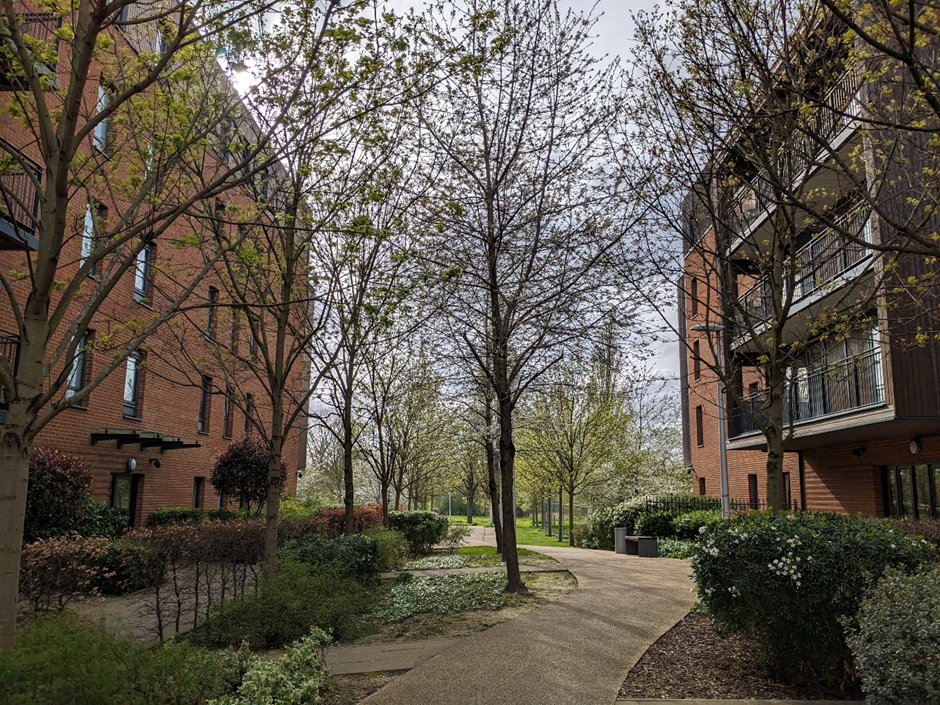
Figure 3: Kidbrooke Village in Greenwich, London (source: https://commons.wikimedia.org/wiki/File:Sutcliffe_Park_from_Kidbrooke_Village.jpg)

My first involvement with the Kidbrooke development began in 2011-12 when I worked with Social Life to develop a social sustainability framework for Berkeley Group. At that time we defined social sustainability as being the extent to which a neighbourhood supports individual and collective wellbeing and combines design of the physical environment with a focus on how the people who live and use a space relate to each other, and function as a community. This in turn is enhanced by the right infrastructure to support a strong social and cultural life.
It was (and is) also clear to me that ‘social sustainability’ in the context of housing is very different to ‘social value’ (which focuses on social and financial return) although since then, as I argue elsewhere, the two terms have sadly and confusingly often been used interchangeably or conflated in built environment research. In 2013, using the framework we developed for Berkeley Group, we compared residents’ perceptions and responses to survey questions on ‘social and cultural life’; ‘voice and influence’; and ‘amenities and infrastructure’ with survey data from ‘comparable places’. To do this we drew on data sources which included the ‘Understanding Society’ study, the ‘Taking Part Survey’, the ‘Crime Survey for England and Wales’, and the ‘Citizenship Survey’. Using statistical testing we were able to highlight whether Kidbrooke Village scored better than comparable places on key measures, and presented the results using a red, amber, green rating for each measure. We found that for new residents at least, their experiences (except for ‘links to neighbours’) were positive about the new development, and how it was impacting on their lives.
Sixteen years on, however, on revisiting the site, what can be said about both the social and environmental sustainability of the development? Firstly, our social sustainability work in 2013 was with a small sample of new residents, and new developments such as Kidbrooke do frequently displace residents who may not return. Moreover, some argue that refurbishment can be a more sustainable option than demolition. Worryingly, although the population of the new development has increased through densification to a projected 14,000 residents on completion (from 5,000), the amount of social housing will have only increased from 1910 to 1930 units on completion.
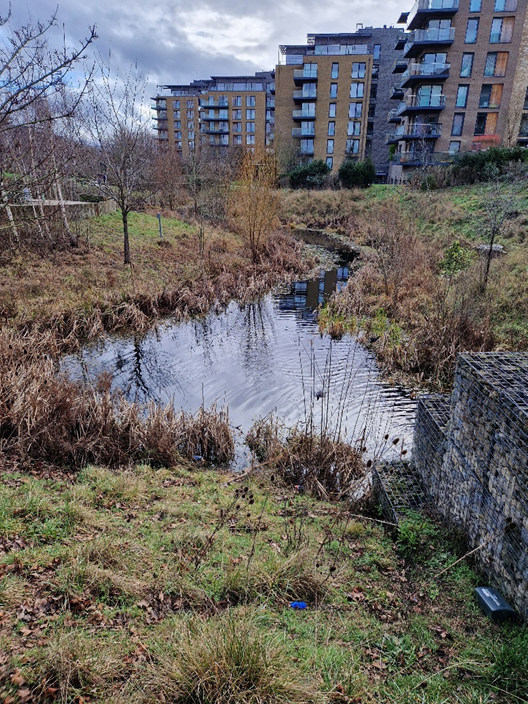
Figure 4: Kidbrooke Village, Cator Park, Greenwich, London (source: Rachel Dixon)
Secondly, in environmental sustainability terms the development is often heralded as an exemplar of green and sustainable design. Certainly much of the published evidence would support this view: for example, it is a brownfield site developed in line with eco-design principles such as the Code for Sustainable Homes; walking and cycling are encouraged; green infrastructure such as Cator Park (Figure 4) are at the heart of the development and biodiversity net gain is calculated to be 250% on completion.
So how successful has Kidbrooke Village been? More research is needed to measure social sustainability on the site over time and the impact on existing and new residents. A good example of how longitudinal tracking of social sustainability can be achieved is at Acton Gardens, West London. But in environmental terms the Kidbrooke project has produced a greener and more environmentally friendly place than it was previously. The development has won awards for its sustainability efforts including the Sir David Attenborough Award for Enhancing Biodiversity (2020), the Landscape Institute’s President’s Prize (2020), and the Excellence in Habitat Restoration Award (2024).
Meanwhile estate regeneration seems set to continue to be a major area of political debate in London. A recent report by the right wing think tank, Centre for Policy Studies, argues that densification is essential in major council estates in London and that after the usual resident voting is completed ‘fast-track development’ planning is required to speed development. In contrast a report by the Green Party in the London Assembly argues that estate regeneration is creating ‘degeneration’, displacement and gentrification, and a presumption against demolition should be introduced in resident voting, alongside a guaranteed and significant social housing uplift.
Ultimately, estate regeneration will not solve London’s housing problems on its own: affordable housing needs to be developed across London in a range of ways, not only by focusing on a range of planning reforms but also finding ways to address other important issues such as how to increase densities, minimise the impacts on existing residents and tackle empty homes. It is vital to ensure however, as well as speeding up housing development, that we do not lose sight of the fact that the outcomes must be socially and environmentally sustainable.
This blog is based on a more detailed article by Timothy J. Dixon for the IES Environmental Scientist (March 2026 Issue, p12-23).
The views expressed in this blog are those of the author and do not necessarily reflect the views of the IES or other organisations or individuals mentioned.